Christmas and New Year Packaging: When to Order Branded Paper Bags
Every December, the same story plays out in shops, cafés and showrooms. The festive window displays are ready, the seasonal range is on the shelves, and the branded bags are still somewhere between the printer and the warehouse. Holiday packaging is one of the few items in a seasonal plan with a hard deadline: a […]
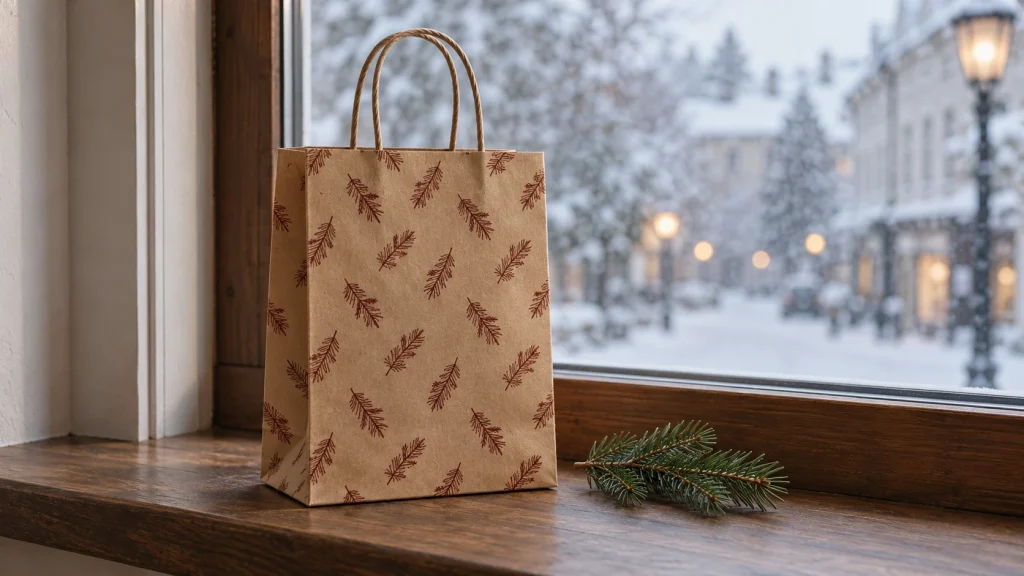
Every December, the same story plays out in shops, cafés and showrooms. The festive window displays are ready, the seasonal range is on the shelves, and the branded bags are still somewhere between the printer and the warehouse. Holiday packaging is one of the few items in a seasonal plan with a hard deadline: a Christmas bag that arrives on 28 December is almost worthless. The good news is that the timeline is predictable. If you know how long each stage takes, you can work backwards from the date you need the bags and know exactly when to act.
Why holiday orders need more time than usual
On paper, a festive bag is made in the same way as any other custom bag. In practice, three things make the season tighter:
- Everyone orders at once. Retail, food service, corporate gifting and e-commerce all plan their peak for the same few weeks. Production lines that run comfortably in spring are fully booked from November.
- Designs are new. A repeat order of your everyday bag uses existing plates and approved colours. A seasonal design starts from scratch: new artwork, new plates, new colour approval.
- The deadline cannot move. With an everyday bag, a one-week delay is an inconvenience. With a Christmas bag, it can mean the stock is used for a fraction of the season, or not at all.
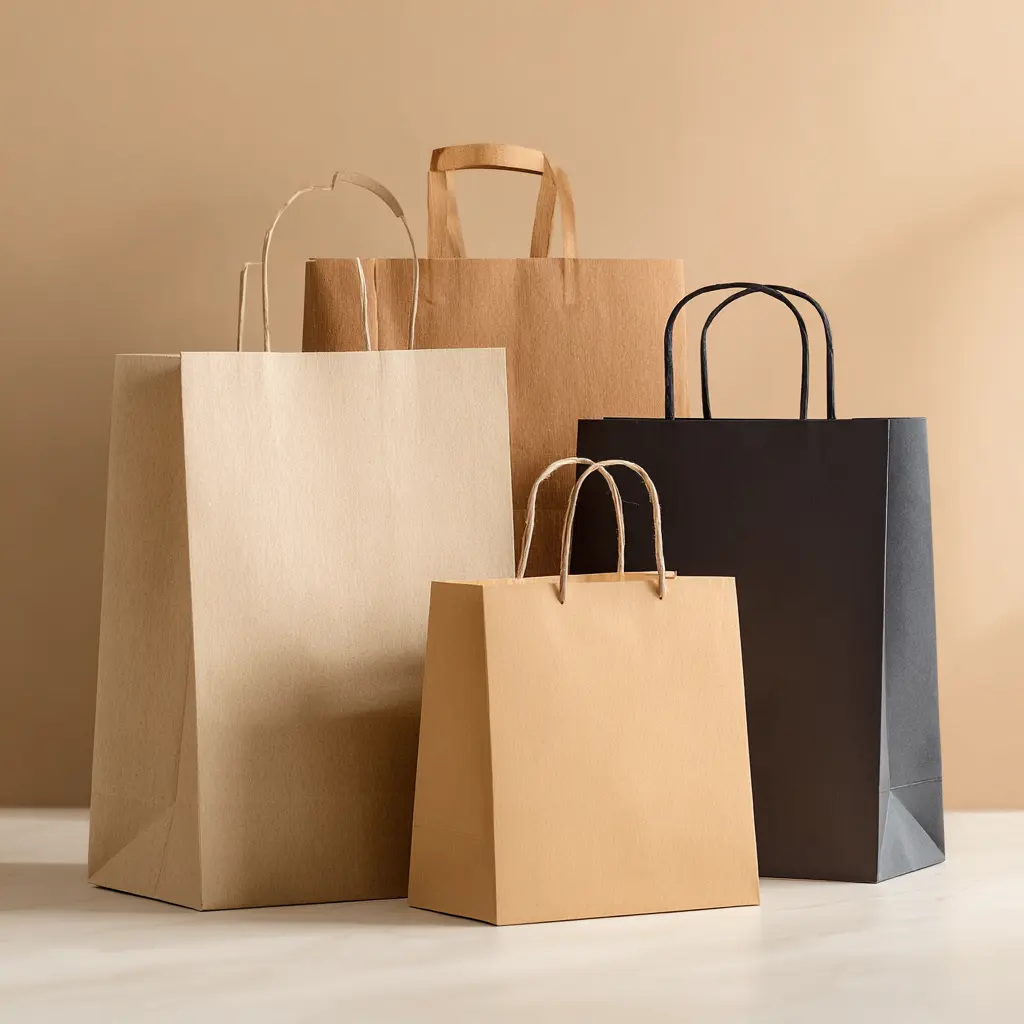

Branded Paper Bags
Your logo on bags made at our Moscow factory.
The real timeline, stage by stage
For a new custom-printed order, the production time is counted from the moment the artwork is approved, not from your first enquiry. That distinction matters more than anything else in this article.
| Stage | Typical time | What depends on you |
|---|---|---|
| Brief and quotation | A few days | Size, paper, handles, quantity and delivery date known in advance |
| Artwork check and approval | From a day to a week or more | Print-ready vector files, quick decisions on comments |
| Printing plates | 3–5 days | Nothing, once the artwork is approved |
| Printing and bag assembly | 10–14 days | Nothing, if the specification is final |
| Delivery | Agreed with the manager before payment; Moscow or carriers to other regions | Receiving slot, storage space |
Put together, a new festive order takes roughly three to four weeks from artwork approval to finished bags. Add the time it takes to brief, prepare and approve the artwork, and the realistic starting point is five to six weeks before the date the bags need to be in your stores.
Working backwards from your date
Most businesses want festive packaging in place by the beginning of December, when gift shopping starts in earnest. Counting back from that date gives a simple calendar:
- Mid-October: decide on quantities, sizes and constructions. Brief your designer.
- End of October: artwork finished and sent to the manufacturer for a technical check.
- First week of November: artwork approved, order confirmed and paid. Production starts.
- End of November: bags delivered, checked and distributed to stores.
If you are reading this later in the season, the plan is not lost, but the margin is. The stages that still depend on you, the brief and the artwork, are the ones to compress.
Five mistakes that push holiday orders past the holidays
1. Counting from the first email
A manufacturer quoting “three to four weeks” means three to four weeks after the artwork is approved and the order is confirmed. A week of back-and-forth over files comes on top of that.
2. Artwork that is not print-ready
Low-resolution logos, fonts that are not converted to outlines, colours specified as “like our website”: each one costs a round of corrections. Prepare vector files (AI, EPS or PDF) and state your brand colours as Pantone references. Note that Vita Group does not design artwork; our team checks your files against the technical requirements of the printing process.
3. Changing the specification mid-way
Switching from kraft to bleached paper, or adding a second size after the quote, often means a new calculation and new plates. Agree the full specification before approval.
4. Ordering too few
Festive bags are used faster than everyday ones: people buy more items, more gifts and more often. A reorder in mid-December rarely arrives in time. It is safer to plan quantities for each store with the peak days in mind.
5. Forgetting about receiving and storage
Bags arrive packed in boxes on pallets. Make sure there is space for them and someone to check the delivery. Paper also needs reasonable storage conditions: keep the boxes dry and away from heaters.
Festive design that works within the timeline
A tight schedule does not have to mean a plain bag. A few choices give a strong seasonal look without extending production:
- Seasonal colour on a standard construction. A twisted-handle kraft bag printed in one or two festive colours is quick to produce and instantly recognisable.
- Flexographic printing in up to eight colours. Enough for festive patterns and brand colours specified in Pantone. Build the design on solid colours: smooth gradients do not reproduce well on kraft paper.
- Coloured handles. Twisted or flat paper handles dyed in a festive colour make a plain kraft bag look seasonal at a glance.
- Printing inside the bag. A pattern or greeting on the inside is a small surprise for the person who opens the gift.
- Paper choice. Natural kraft gives a warm, crafted look; bleached kraft makes colours brighter.
One practical tip: keep the logo in the same colours as on your everyday bag. Your brand colours are then already defined, and approval is about the festive elements only.
Which bag for which use
- Gift shops and fashion retail: twisted-handle bags in bleached or natural kraft with a printed design, or folded top bags for a neater, more premium edge.
- Bakeries and patisseries: block-bottom bags for boxed cakes and sets; V-bottom bags, including greaseproof ones, for pastries and gingerbread.
- Cafés and food to go: block-bottom bags that stand upright and keep containers level.
- Corporate gifting: tell us the weight of the heaviest set in advance, so the paper and handles are chosen for the load.
The full range of festive constructions, sizes and paper options is on our Christmas paper bags page.
A short checklist before you request a quote
- How many bags per store, and on which date do they need to be there?
- Which construction and size: handles or no handles, flat or rectangular base?
- What weight will the bag carry?
- Kraft or bleached paper, and what density?
- How many colours, and do you need coloured handles or printing inside?
- Is the artwork ready in vector format, with Pantone references?
With these answers in hand, a quotation with cost and lead time can be prepared quickly, and the countdown to delivery starts sooner.
The bottom line
Holiday packaging is rarely late because production is slow. It is late because the decisions that come before production take longer than expected. Start from your in-store date, allow three to four weeks for production after artwork approval, and add time for the brief and the files. For festive bags needed at the start of December, that means having the order confirmed in early November.
Planning your festive packaging? Send us your brief, and we will come back with a quotation and a realistic delivery date.
Make Your Brand Visible
We print your logo on paper bags of your choice.