Paper Bags and Moisture: What Kraft Can and Cannot Handle
Kraft paper is strong, comfortable to carry and easy to print, which is why so many shops and cafés use it. It also has one clear weakness: water. Buyers who switch to paper sometimes discover this on the first rainy day, or when a courier delivers a bag that has gone soft at the bottom. […]
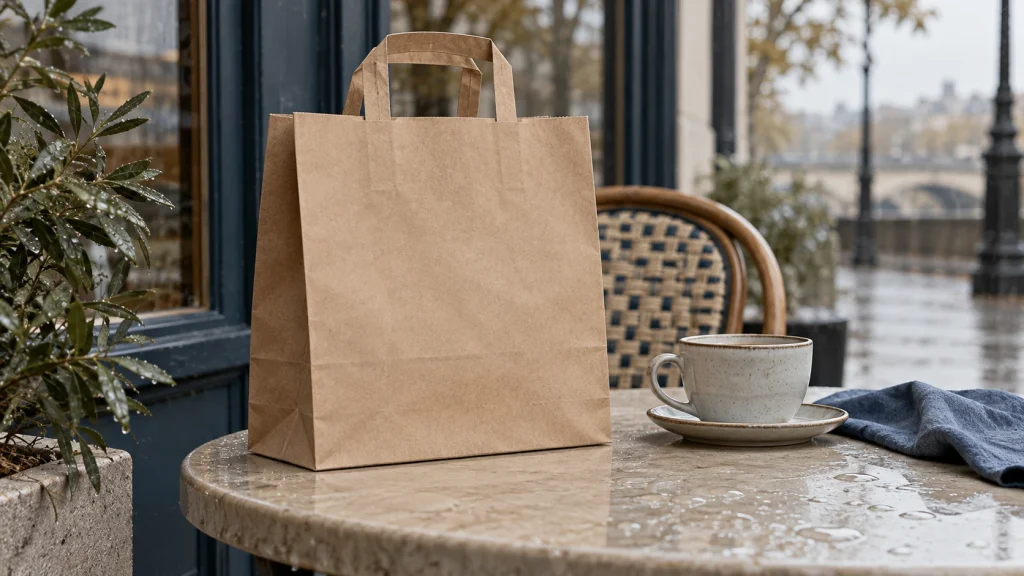
Kraft paper is strong, comfortable to carry and easy to print, which is why so many shops and cafés use it. It also has one clear weakness: water. Buyers who switch to paper sometimes discover this on the first rainy day, or when a courier delivers a bag that has gone soft at the bottom. The topic of paper bags and moisture deserves an honest answer rather than a sales pitch. This article explains what happens when kraft gets wet, where the real risks are, and how to plan around them.
What water does to kraft paper
Paper is a web of plant fibres held together by bonds that form as the sheet dries during manufacture. Water loosens those bonds. When kraft absorbs moisture, it becomes softer, stretches more easily and loses a large part of its strength. When it dries again, it partly recovers, but it may stay wrinkled or warped.
In practice, this means:
- Brief contact is usually fine. A few drops of rain or a short walk in drizzle will not ruin a bag.
- Soaking is not. A bag that stands in a puddle, sits in wet snow or holds a leaking container can fail, usually at the bottom or where the handles are attached.
- Weight makes it worse. A wet bag carrying a light item may survive; the same bag carrying something heavy is much more likely to tear.

Make Your Brand Visible
We print your logo on paper bags of your choice.
Rain and snow
For most retail purchases, the walk from the shop to a car, a bus stop or a front door is short enough that a paper bag copes with ordinary weather. Problems start in heavy rain, wet snow and long journeys on foot. A few simple measures help:
- Keep bags with heavy goods away from wet floors and doorsteps; the base absorbs water fastest.
- In bad weather, staff can fold the top of the bag over to keep rain off the contents.
- For heavy or valuable purchases, offer a second bag or suggest the customer carries the bag close to the body under a coat or umbrella.
- For stores with outdoor queues or pickup points, provide a covered area where bags are handed over.
None of this is unusual. Customers who choose paper generally understand that it is paper; what they will not accept is a bag that fails within a few metres.
Condensation: the hidden source of moisture
The wettest bags are often not the ones caught in the rain, but the ones carrying cold or hot goods.
Cold goods
Chilled drinks, ice cream and frozen food collect condensation on the outside of their packaging as soon as they reach room temperature. That water goes straight into the bottom of a paper bag. For occasional purchases this is manageable; for a shop selling a lot of frozen products, it is worth looking at another construction.
Hot food
Hot dishes release steam. If containers are not tightly closed, or the bag is sealed too early, the steam condenses inside the bag and soaks the paper from the inside. Let steam escape before closing the bag, and use containers with tight lids.
Where a foil-lined thermal bag fits better
For hot and frozen food, a foil-lined thermal bag is often a better choice than plain kraft. It has kraft paper on the outside and a foil or metallised layer inside, made from ready-made foil-lined kraft. The inner layer separates the paper from moisture coming from the contents and helps keep the temperature for longer. It is not a substitute for a sealed container, and it does not make the outside of the bag waterproof, but it handles condensation from food much better than an ordinary paper bag.
Grease is not the same as water
Buyers sometimes assume that greaseproof paper is also waterproof. It is not. Greaseproof paper is made to stop fats and oils from soaking through, so a croissant or a burger does not leave marks on the bag or the customer’s hands. Liquids are a different matter: soups, sauces and drinks belong in sealed containers, whatever the bag. For burgers, sandwiches and pastries, greaseproof wrapping paper in sheets or rolls keeps the grease inside the wrap and the outer bag clean.
We looked at heat, grease and moisture in coffee-to-go packaging in more detail in a separate article: packaging for coffee shops and to-go.
Paper bags and moisture in storage
Paper reacts to humidity long before it meets a raindrop. Bags stored in a damp basement or next to a loading door can curl, lose their shape and become harder to open. Bags stored next to a heater dry out and may become brittle. A few rules keep stock in good condition:
- Store boxes indoors, in a dry room, away from heaters and outside doors.
- Keep pallets off the floor and away from walls that may be damp.
- Leave bags in their original boxes until they are needed.
- Use older stock first, especially before the wet seasons.
A practical checklist for buyers
- Describe the real conditions to your supplier: products, weight, journey, weather, hot or frozen goods.
- Separate the problems: grease needs greaseproof paper, temperature and condensation need a thermal bag, liquids need sealed containers.
- Test samples with your own products. Free unprinted samples of our constructions are available from stock, so you can see how a bag behaves with chilled drinks or hot food before you order.
- Train staff to pack sensibly: heavy items at the bottom, hot food not sealed in, bags not left on wet floors.
- Plan storage as carefully as you plan the order.
The bottom line
Kraft paper handles everyday conditions well, but it is not waterproof, and no honest supplier should claim otherwise. Brief rain is rarely a problem; soaking, condensation and leaking containers are. Use greaseproof paper for fatty food, foil-lined thermal bags for hot and frozen orders, sealed containers for liquids, and store your stock dry. Planned this way, paper bags and moisture can coexist without unpleasant surprises.
Not sure which bag suits your conditions? Describe your products and how they travel, and we will suggest a construction and send samples.
Eco-friendly Packaging
Preserve your reputation and care for the planet with us.