Shareable Packaging: Paper Bags and Social Media Photos
Customers photograph their purchases: a new pair of shoes on the way out of a shop, a box of pastries on a café table, a delivery order before it is unpacked. When the bag is in the frame, your brand travels with the photo to people who have never visited you. Shareable packaging is not […]
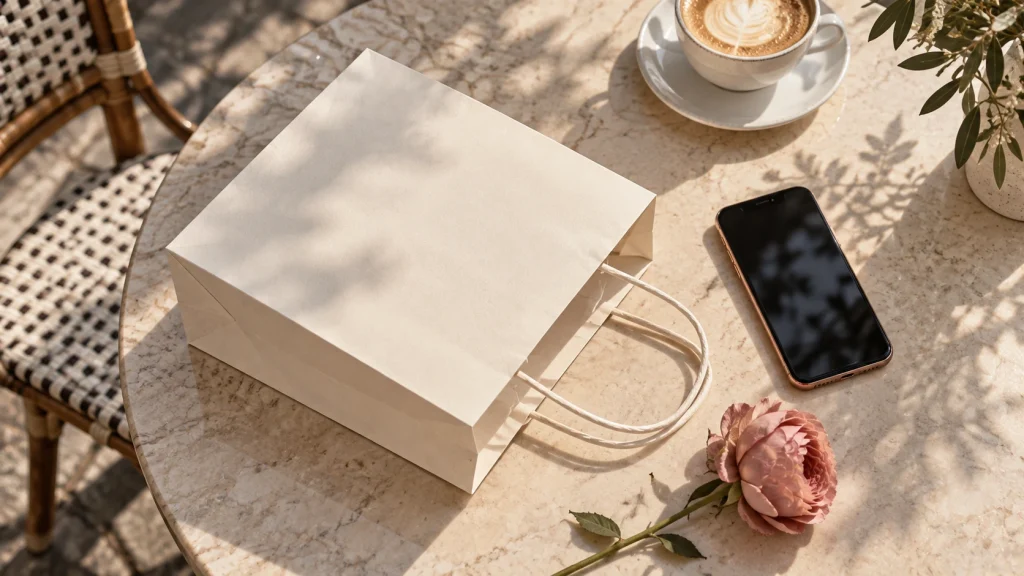
Customers photograph their purchases: a new pair of shoes on the way out of a shop, a box of pastries on a café table, a delivery order before it is unpacked. When the bag is in the frame, your brand travels with the photo to people who have never visited you. Shareable packaging is not about decoration for its own sake. It is about a few design decisions that make a bag look good on a phone screen and recognisable at a glance. This article goes through them one by one.
What a phone camera sees
A bag in a social media photo is usually small, partly cropped and seen for a second or two. That changes the priorities compared with a bag seen in person.
- Strong shapes beat fine details. Thin lines and small text disappear on a phone screen.
- Colour is recognised before the logo. A consistent brand colour is identifiable even when the name is out of frame.
- Clean surfaces photograph better. A bag crowded with elements looks busy in a small image.
- The bag is often seen from above or at an angle. The top edge, the handles and the inside are in shot more often than you might expect.

Branded Paper Bags
Your logo on bags made at our Moscow factory.
Colour: own one and use it everywhere
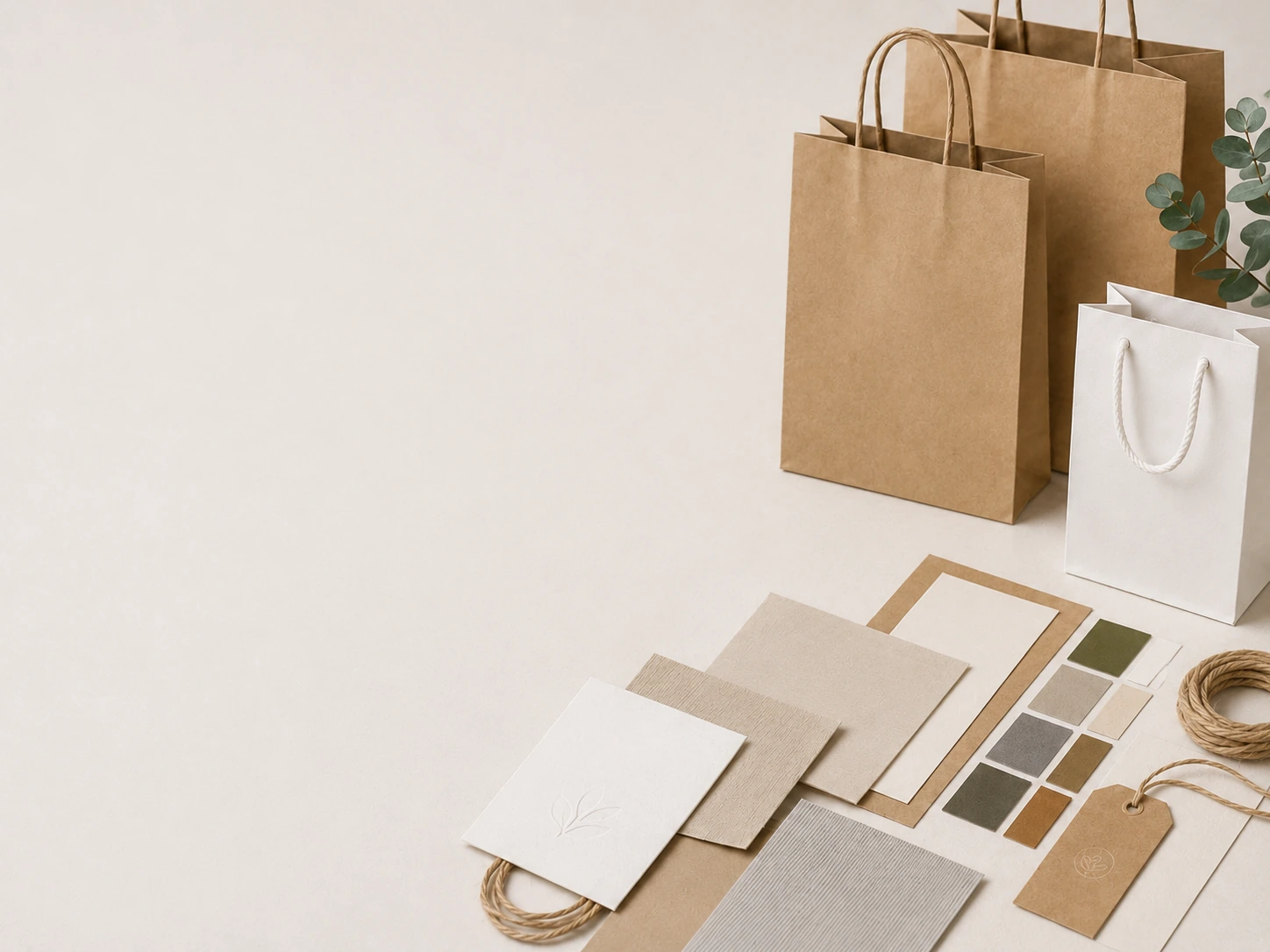
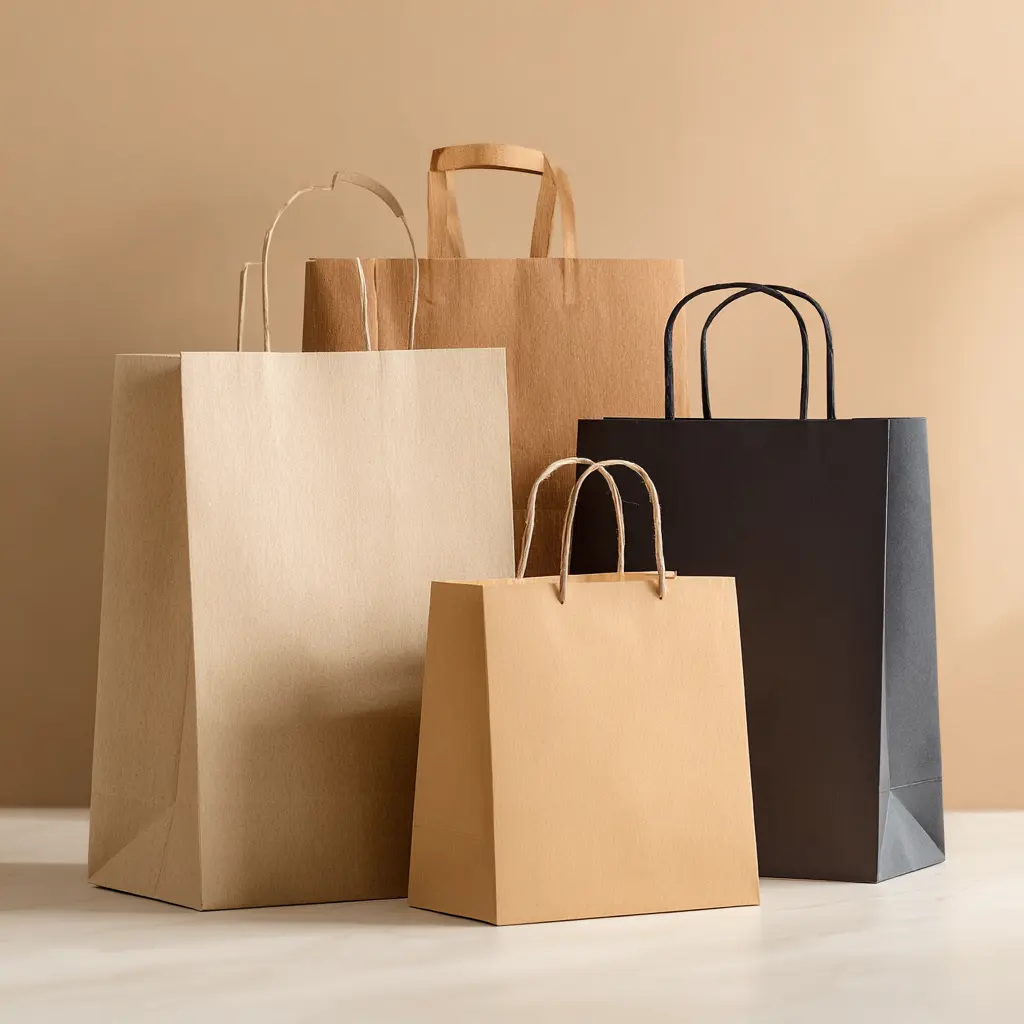
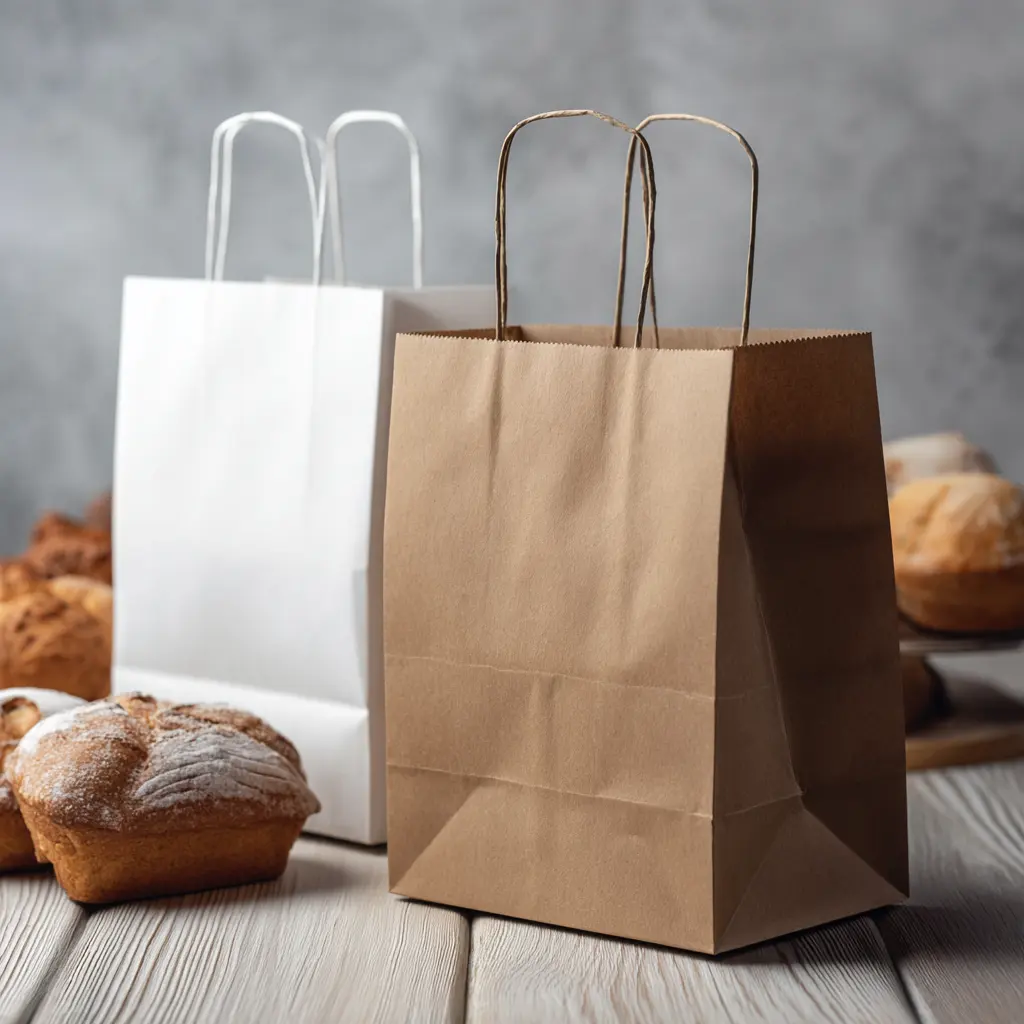
The most photogenic bags tend to be built around one confident colour. It could be the paper itself, natural brown kraft or bleached white kraft, or a solid printed colour covering the whole bag.
- Specify the colour as a Pantone reference and use the same reference in every run, so the bag looks the same in every photo, month after month.
- Use solid fills. A flat colour across the bag reads clearly in a photo. Smooth gradients and photographic images do not reproduce well on recycled-fibre paper, so build the design on solid colours.
- Think about the background. Bags are photographed on café tables, car seats and wooden floors. A colour that stands out from those surfaces is more visible.
Ready-made colour options are a good starting point; see our coloured paper bags with twisted handles.
Logo placement for the frame
Most people will not frame a photo around your logo, so place it where it is likely to be seen anyway.
- Large and centred on the front panel is the most reliable choice. A small logo in a corner is easily cropped out.
- Repeat it on both main panels. You do not control which side faces the camera.
- Consider a mark on the gusset. A bag held by its handles often turns sideways; a short word or symbol on the side keeps the brand visible.
- Keep the area below the handles clear of important elements, as hands and handles cover it.
Printing inside the bag: the reveal
The moment of opening a bag is one of the most photographed. Printing inside the bag turns that moment into something worth sharing: a pattern, a bright solid colour, a short message or a hashtag. The outside can stay restrained while the inside surprises.
Inside print works especially well for gift purchases, fashion and confectionery, where the customer often films or photographs the unpacking. Vita Group prints inside bags; plan the inside and outside artwork together so the colours and style match.
Handles: a detail that shows up in every photo
Handles are in almost every shot of a bag being carried. Plain handles are fine, but handles dyed in a brand colour make the bag look considered and complete.
- Matching handles in the same colour as the bag give a calm, uniform look.
- Contrasting handles, for example a bright colour on natural kraft, add a recognisable accent even on an unprinted bag.
- Twisted or flat paper handles are both available. Twisted handles look more traditional and textured; flat handles look simpler and more graphic.
At Vita Group, twisted and flat paper handles can be dyed in any colour.
The folded top edge
The top of the bag is often the closest part to the camera, especially in photos taken from above. A raw cut edge looks functional; a top edge folded inside the bag looks neat and finished. On folded top bags, the handle ends are fixed under the fold, which keeps the rim tidy. In a close-up of an open bag, that clean rim is noticeable. Fashion brands often choose this construction for exactly that reason; more on the sector is on our fashion and accessories page.
What turns a bag into shareable packaging
Design makes a bag photogenic; context makes people take the photo. A few practical ideas that cost little:
- Give the bag a reason to be in the shot. A short line or hashtag inside the bag suggests the action without pushing it.
- Keep the bag consistent. A bag that looks the same over time becomes part of how customers recognise you online.
- Make it reusable. A sturdy bag that people keep and reuse appears in photos long after the first purchase.
- Check your own feed. Search for photos customers have already posted. You will quickly see which side of the bag faces the camera and what gets cropped.
A design checklist
- One main brand colour, specified as a Pantone reference.
- Solid fills, no gradients or photographic images.
- Large logo on both main panels, nothing important near the handles.
- Inside print for the opening moment, if the budget allows.
- Dyed handles in a matching or contrasting colour.
- A folded top edge for a cleaner rim in close-ups.
- Artwork supplied as vector files (AI, EPS or PDF). Vita Group does not design artwork, but our prepress team checks files before printing.
The bottom line
Shareable packaging comes down to a few clear decisions: one strong colour, a logo that survives cropping, something worth seeing inside, handles that match the brand and a neat top edge. None of these requires special finishes; they are all part of how the bag is printed and constructed. Get them right, and every customer photo becomes a small advertisement.
Planning a bag your customers will want to photograph? Send us your brief, and we will suggest a construction and calculate the order.
Protect Goods in Transit
Durable bags and boxes preserve the look and integrity of your product.