Paper Instead of Plastic: Where Paper Bags Work and Where They Don’t
More and more shops, cafés and brands are replacing plastic carrier bags with paper. Customers often expect it, and a well-made paper bag is a good surface for a brand. But paper is a different material with different strengths, and a switch made without thinking about it can lead to torn handles, soggy bases and […]
More and more shops, cafés and brands are replacing plastic carrier bags with paper. Customers often expect it, and a well-made paper bag is a good surface for a brand. But paper is a different material with different strengths, and a switch made without thinking about it can lead to torn handles, soggy bases and unhappy customers. This article looks honestly at paper instead of plastic: where paper is the better choice, where it struggles, and how to choose a construction that does the job.
Where paper bags clearly work well
Retail and fashion
Clothing, shoes, accessories, books, cosmetics and gifts are dry, shaped and moderate in weight. That is ideal territory for paper. A bag with twisted or flat paper handles holds its shape, looks considered and is often reused by the customer, which keeps your brand in view long after the purchase.
Bakeries and dry food
Bread, pastries and baked goods are traditionally sold in paper, and for good reason: paper lets bread breathe, so the crust stays dry. V-bottom bags are quick to fill at the counter, and greaseproof versions handle buttery items.
Takeaway and delivery
Block-bottom bags stand upright, keep containers level and are easy for couriers to carry. For hot or frozen food, thermal bags with a foil or metallised layer inside help hold the temperature.
Branding
Paper takes print well. Solid brand colours, a large logo, printing inside the bag and handles dyed in a brand colour all give a strong brand presence.
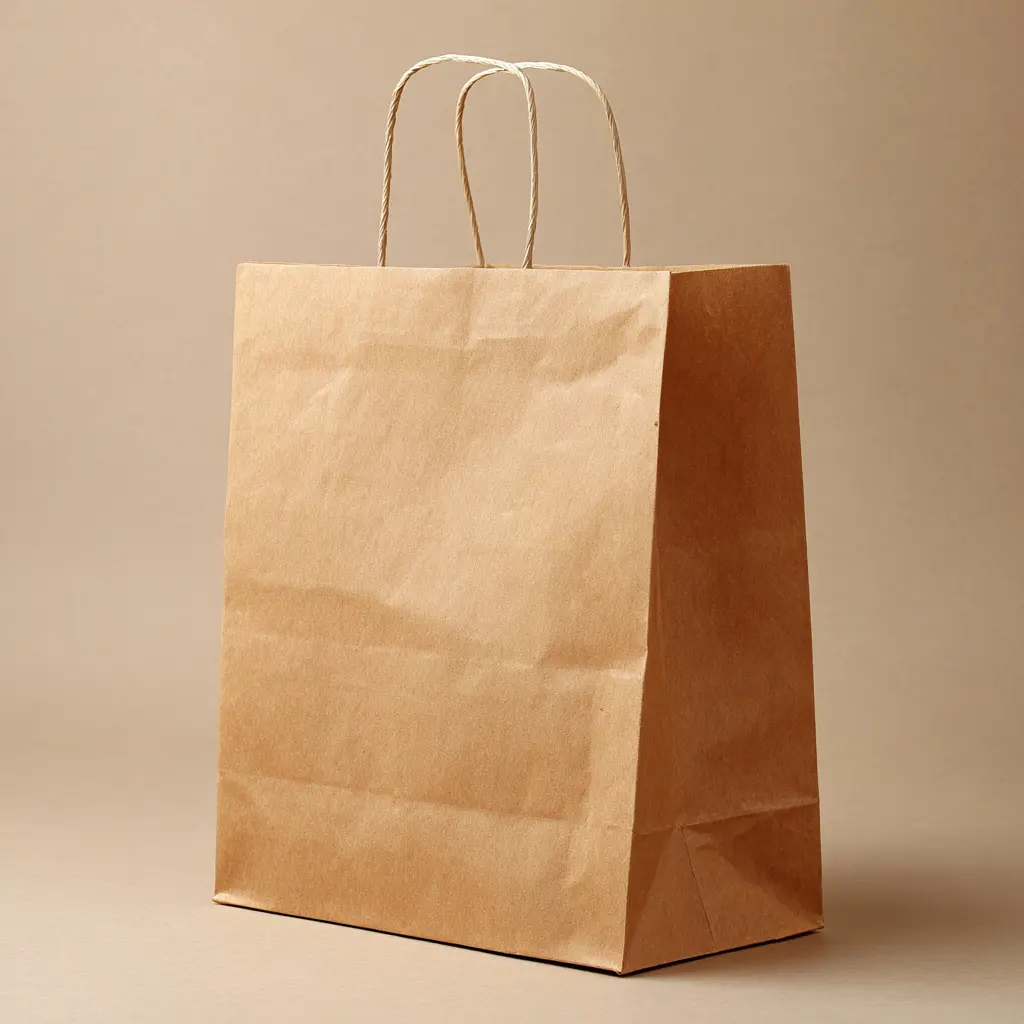

Make Your Brand Visible
We print your logo on paper bags of your choice.
Where paper has real limits
Being honest about the limits is what makes a switch work.
Wet and leaking goods
Paper loses strength when it gets wet. Fresh fish, defrosting meat, wet flowers, open drinks and anything that may leak will weaken the base and seams of a paper bag. For these items, an inner wrap or a sealed container inside the paper bag is usually needed.
Rain and outdoor use
A paper bag carried through heavy rain will get wet. Kraft paper can cope with a short walk in light rain, but it is not a raincoat. If your customers often walk a long way outdoors, take that into account when choosing paper and handles.
Heavy and sharp items
Bottles, tins, tools and hardware are heavy and concentrated, and sharp corners can pierce paper. A paper bag can carry a substantial load when the construction is right, but the bag needs to be chosen for the specific weight and shape of what goes in it. Tell your supplier what the heaviest typical purchase weighs, and test samples with real goods.
Storage and space
Paper bags take up more space in storage than thin plastic ones, and they need dry conditions away from heaters and damp. Plan room for stock, especially if you order in full production runs. Before ordering, estimate monthly usage per store, so that a run fits your storage and is used within a reasonable time.
Paper instead of plastic: a side-by-side view
| Use | Paper bag | What to watch |
|---|---|---|
| Clothing, shoes, gifts | Very good fit | Size the bag to the goods |
| Bread and pastries | Very good fit | Greaseproof bags for buttery items |
| Takeaway food | Good with a block bottom | Containers must be sealed |
| Hot or frozen delivery | Good with a thermal bag | Choose a thermal construction |
| Bottles and heavy goods | Possible with the right construction | Test with the real load |
| Wet or leaking goods | Weak on its own | Use an inner wrap or container |
Choosing the right construction
Most problems with paper bags come from using one construction for every purpose. Matching the bag to the goods solves most of them.
- Twisted paper handles are comfortable to carry and suit most retail purchases.
- Flat paper handles are simple and economical, good for lighter purchases and high-volume stores.
- Block-bottom bags give a stable, flat base for containers, boxes and multi-item orders.
- V-bottom bags are fast and compact for single items at the counter.
- Folded top bags, with the top edge folded inside and handles fixed under the fold, give a neater rim for fashion and premium retail.
Our guide to flat, rectangular and V-bottom constructions explains the differences in more detail.
A mixed approach often works best
Switching to paper does not have to be all or nothing. Many businesses use paper for most purchases and keep a different solution for the few items paper does not handle well.
- A grocery shop may use paper bags for bread, fruit and dry goods, and sealed packaging for chilled fish and meat.
- A café may use paper bags for takeaway and wrap sauced items in greaseproof paper first.
- A fashion store may use paper bags for nearly everything, with a larger size for shoe boxes and heavy items.
The aim is a bag that does its job every time, not a symbolic change that customers notice for the wrong reasons.
What to tell customers
Keep claims about paper simple and accurate. It is fair to say that paper bags can be recycled wherever paper is collected, and that a sturdy bag is easy to reuse. Avoid broad environmental promises you cannot support. Customers notice a well-made bag more than any slogan printed on it. Brief your staff too: a cashier who can explain the new bags in one sentence makes the change easier for regular customers.
The bottom line
Used instead of plastic, paper is an excellent choice for retail, fashion, bakeries and most takeaway, and it gives your brand a good surface to work with. It is weaker with wet, leaking and very heavy goods, so match the construction to what goes inside and test samples with real products. A mixed approach, with paper as the default and a different solution for the exceptions, is often the most practical. More ideas for shops are on our retail packaging page.
Planning a switch to paper? Tell us what you sell, and we will suggest constructions and send free samples to test.
Fast Packaging Supply
Get a precise quote and delivery timeline within 24 hours.