QR Codes on Paper Bags: Practical Uses That Bring Customers Back
A branded bag leaves the shop with the customer and stays in their home for days or weeks. That makes it a natural place for a link to your business, and a QR code on paper bags is the simplest way to provide one. The idea is easy; the execution is where most codes fail. […]
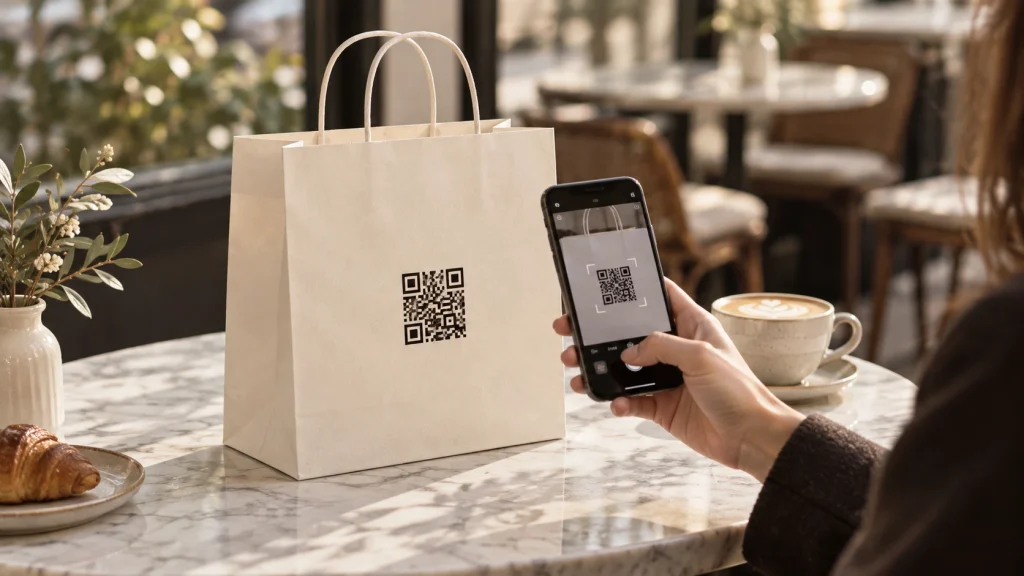
A branded bag leaves the shop with the customer and stays in their home for days or weeks. That makes it a natural place for a link to your business, and a QR code on paper bags is the simplest way to provide one. The idea is easy; the execution is where most codes fail. A code that is too small, too pale or printed across a fold will not scan, and a code that leads to a generic home page will not be used twice. This article covers both sides: how to print a QR code that works on kraft paper, and what to link it to.
Why put a QR code on paper bags
Receipts get thrown away, leaflets get lost, and stickers peel off. A bag is reused: for lunch, for shopping, for storing things at home. Every time it is picked up, the code is in front of someone who has already bought from you once.
That last point matters. Bags are produced in large runs and used over months. Link the code to a page or a redirect on your own domain, not directly to a promotion that will end next week, so you can change the destination while the bags are still in circulation.

Bags That Sell
Order packaging with your logo and boost brand awareness.
Printing a QR code that scans on kraft
Flexographic printing on paper is not the same as printing on a smooth label. Kraft has texture and fibre, ink spreads slightly into it, and the background is brown or off-white rather than pure white. A code that scans perfectly on screen can fail on the bag. A few rules prevent that.
Size
Do not shrink the code to fit a corner. The finer the modules (the small squares), the more ink spread affects them. Keep the encoded link short, because a shorter link produces a simpler code with larger modules at the same overall size. If the design has room, make the code larger than you think it needs to be.
Contrast
- Print the code in one solid, dark colour: black, a deep brand colour, dark brown on natural kraft.
- Never reverse it (light code on a dark background) unless you have tested it on the real material.
- Avoid pale colours, tints and gradients. Gradients do not reproduce well on kraft paper in any case; a QR code needs a solid fill.
- On natural brown kraft, contrast is lower than on bleached kraft. If the code is important, consider bleached paper or a solid light panel printed behind the code.
Quiet zone
A QR code needs an empty margin around it, called the quiet zone. The standard is four modules wide on every side. Text, a pattern or the edge of the bag inside that margin can stop the scanner from finding the code. Do not trim it to save space.
Where to place the code on the bag
- On a flat panel, away from folds. The front and back panels are best. Gussets fold and side seams overlap, which distorts the code.
- Away from the base and handle area. The bottom of the bag gets creased and dirty; the top is often covered by the customer’s hand.
- At a comfortable height. Someone holding the bag or seeing it on a table should be able to point a phone at it without turning it over.
- With a short call to action. A code with no explanation gets ignored. “Reorder in one tap” or “Leave a review” tells people why to scan.
Printing the code inside the bag
Printing inside the bag is a useful option for QR codes. The outside stays clean and focused on the brand, while the code appears when the customer unpacks the order at home, which is exactly when they are most likely to use it. This works especially well for delivery, takeaway and gifts. Vita Group can print on the inside of the bag; the same rules on size, contrast and quiet zone apply.
Seven practical uses for a QR code on a bag
- Reorder. For cafés, bakeries and delivery services, the code opens the menu or the order page. The customer who liked the meal can order again without searching.
- Reviews. A direct link to your profile on a map or review service turns a satisfied customer into a public rating while the experience is fresh.
- Loyalty programme. The code opens registration for a loyalty card or a bonus app. The bag reaches customers who never stopped at the till long enough to sign up.
- Instructions. Reheating instructions for ready meals, care instructions for clothing, storage advice for bread or confectionery.
- Product information. Ingredients, allergens or the story of a product that does not fit on a label.
- Social media. A link to your account, ideally with a reason to follow: new collections, seasonal menus, events.
- Feedback. A short form for complaints and suggestions. Customers who can report a problem easily are less likely to post it publicly.
Choose one main purpose per bag. A bag with three codes is confusing, and a single clear action is more likely to be taken.
Test before you approve the artwork
The code must be checked before the plates are made, not after the bags arrive. A simple routine:
- Check that the link opens the right page on both Android and iOS, with mobile data and on Wi-Fi.
- Print the artwork at actual size and scan it with several phones, including an older one, from normal holding distance.
- Ask the manufacturer’s prepress team to check the code area in the final file: colour, size and the quiet zone.
- Keep the redirect active for as long as the bags may be in use.
Send the artwork as vector files (AI, EPS or PDF) with the code as a vector object, not a pasted low-resolution image. Vita Group does not create artwork, but our prepress team checks your files against the requirements of flexographic printing before approval.
Choosing the bag for a QR code
Any construction with a flat panel will carry a code. For takeaway and delivery, block-bottom paper bags stand upright on the table, so the front panel faces the customer while they unpack. For retail, twisted- or flat-handle bags give a large front panel for both logo and code. Food service businesses will find more ideas on our restaurants and cafés page.
The bottom line
A QR code on paper bags is a low-cost way to keep in touch with customers after they leave, but only if it scans and leads somewhere useful. Print it in one dark solid colour, keep the quiet zone, place it on a flat panel or inside the bag, link it to an address you control, and test it at full size before the artwork is approved.
Planning a bag with a QR code? Send us your brief and artwork, and we will check the files and prepare a quotation.
Stability for Your Business
Quality control on every run and agreed deadlines.