Two Bag Types in One Café: When It Makes Sense
Many cafés start with one bag for everything. It is simple to order, simple to store and simple for staff. Then the menu grows, delivery takes off, and the same bag is used for a single croissant and for a family order of three hot meals. At that point the question comes up: should you […]
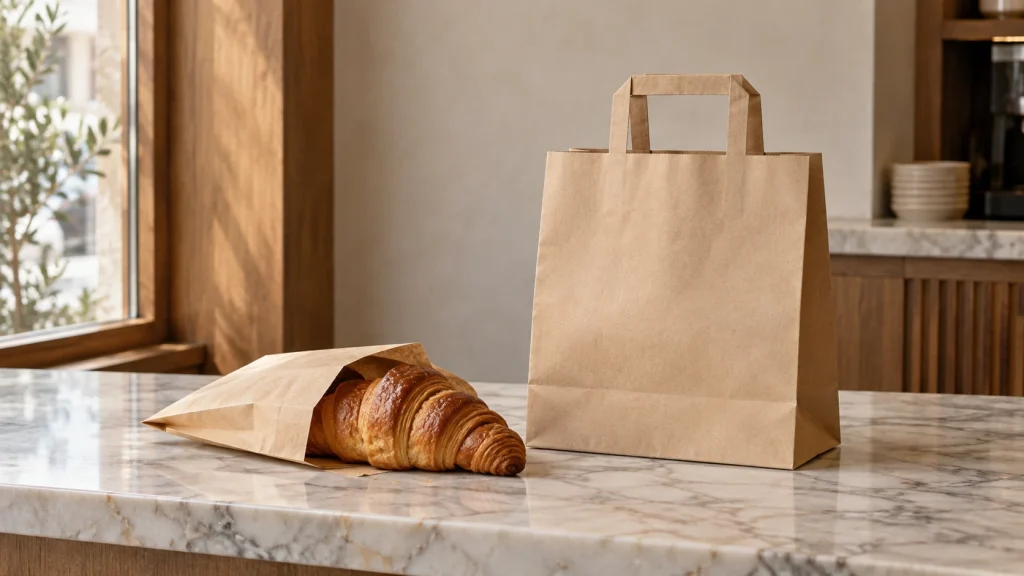
Many cafés start with one bag for everything. It is simple to order, simple to store and simple for staff. Then the menu grows, delivery takes off, and the same bag is used for a single croissant and for a family order of three hot meals. At that point the question comes up: should you keep two types of paper bags for cafés, or is one enough? There is no universal answer, but there is a clear way to decide. This article looks at what each type does well, what a second bag really costs, and when the switch pays off.
Paper bags for cafés: two jobs, two different bags
A café’s orders usually fall into two groups.
- Counter takeaway: a pastry, a sandwich, a cookie with a coffee. Small, light, carried a short distance, often eaten within minutes.
- Delivery and large takeaway orders: several containers, cups, cutlery, sauces. Heavier, carried by a courier, and often travelling for half an hour or more.
These two jobs ask different things of a bag. The first needs to be quick to pack and cheap per piece. The second needs a stable base, enough volume and handles or a top that closes securely.

Make Your Brand Visible
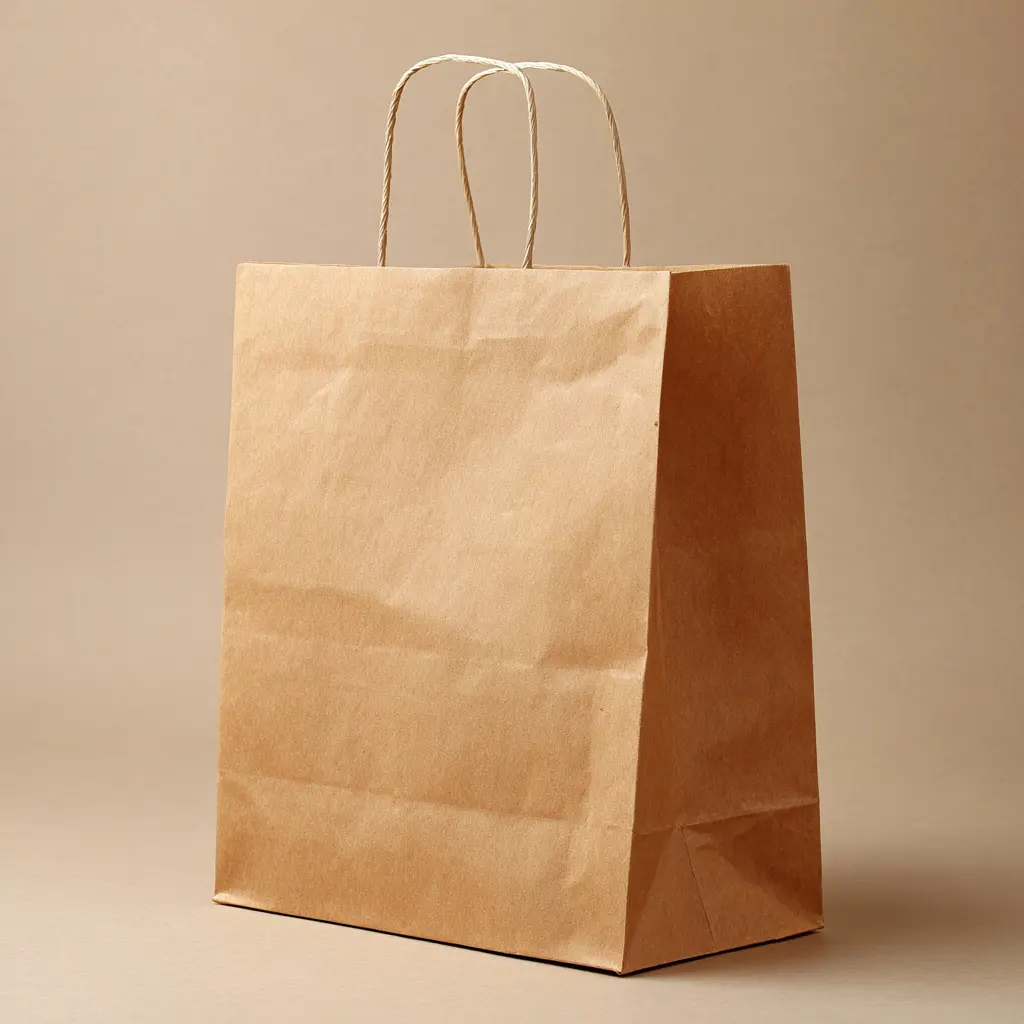
We print your logo on paper bags of your choice.
The small V-bottom bag: fast and economical
A V-bottom paper bag is a flat bag with a folded, pleated base. It has no handles and does not stand on its own.
- Strengths: quick to fill at the counter, takes up very little space, lower cost per piece than a bag with a rectangular base. Ideal for pastries, sandwiches, buns and cookies. A greaseproof version helps with buttery or oily items.
- Limits: containers do not sit level in it, and it is not meant for heavy or multi-item orders.
The block-bottom bag: stable for delivery
A block-bottom paper bag has a rectangular base that opens flat, so the bag stands upright. It can be made with or without handles.
- Strengths: containers stay level, drinks are less likely to tip, the bag is easy to pack on the counter and easy for the courier to carry. It also presents the brand better at the customer’s door.
- Limits: higher cost per piece and more storage space than a V-bottom bag. For a single croissant it is more packaging than the order needs.
What a second bag type really costs
The price per piece is only part of the calculation. A second type adds costs that are easy to overlook.
| Factor | One bag type | Two bag types |
|---|---|---|
| Minimum order | One custom-printed run | Two runs, each with its own minimum quantity |
| Printing plates | One set | A set for each bag size and design |
| Storage | One stack of boxes | Two stocks to track and reorder |
| Staff | No choice to make | Simple rule needed: which order goes in which bag |
| Cost per order | Overpaying on small orders, or under-packing large ones | Each order gets a bag matched to it |
Minimum runs are the main point. At Vita Group, standard custom-printed bags are produced from 30,000 units per order. For a café that uses a few hundred bags a day, that is a manageable volume for one type. If the second type is used much less, its run may last a very long time and occupy storage space for months. Count how many bags of each type you actually use per month before you decide.
When two types make sense
- Delivery is a real share of orders. If delivery is regular, a bag designed for it reduces spills, complaints and repacking.
- Counter sales are mostly single items. Putting one pastry in a large block-bottom bag wastes money on every sale.
- Both volumes are high enough to use each run within a reasonable time.
- There is space to store two stocks in dry conditions, away from heat and steam.
- Staff can follow a simple rule, such as “one or two items in the small bag, containers in the large one”.
When one type is enough
- Orders are similar in size. A coffee shop that mostly sells a drink and a pastry may never need a large bag.
- Delivery is occasional. A mid-size block-bottom bag can cover both counter and delivery orders without much waste.
- Storage is very limited. In a small kiosk, a second stock may simply not fit.
- Usage of one type would be too low to justify a full printed run.
- The menu changes often. If items come and go with the seasons, one versatile size is easier to keep useful than two specialised ones.
Making a two-bag system work
If you choose two types, a few decisions keep it simple.
- Use the same artwork style on both. The same logo, colours and Pantone references make the two bags look like one family and simplify approval.
- Size each bag around real orders. Measure your largest standard delivery set and your most common counter item, and choose sizes around them rather than around the catalogue.
- Agree reorder points for each. With a lead time of about three to four weeks from artwork approval for a new order, reorder before stock runs low, not when it runs out.
- Brief the team. Show staff which orders go in which bag during the first week, and check how the rule works at busy times.
- Test before committing. Free unprinted samples of different constructions let you pack real orders and see what fits before ordering a printed run.
For delivery-heavy menus, thermal bags with a foil layer inside are a third option for hot or frozen food, but most cafés do not need them as a standing item. More food service options are on our restaurants and cafés page.
The bottom line
Two bag types make sense when a café has two genuinely different order profiles, each with enough volume to use a printed run, and room to store both. A small V-bottom bag for counter items and a block-bottom bag for delivery is the most common pairing. If orders are similar or volumes are low, one well-chosen size of paper bags for cafés is simpler and often cheaper overall.
Not sure whether you need one bag or two? Tell us about your menu and order volumes, and we will suggest constructions and sizes and send samples.

Maximum Customer Trust
Certificates, quality, and stable supply — a plus for your business.