How Bag Shape Changes the Perceived Portion Size
A customer judges a takeaway order before tasting it. The first impression comes from the bag: how heavy it feels, how full it looks, how much empty space there is when it is opened. The same pastry can look generous in one bag and disappointing in another. This is perceived portion size, and packaging shapes […]
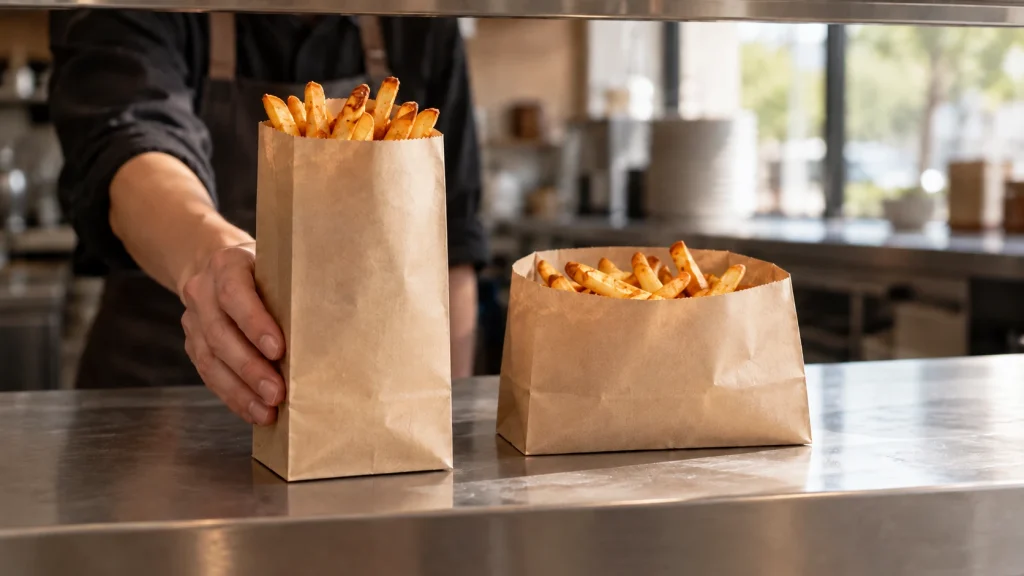
A customer judges a takeaway order before tasting it. The first impression comes from the bag: how heavy it feels, how full it looks, how much empty space there is when it is opened. The same pastry can look generous in one bag and disappointing in another. This is perceived portion size, and packaging shapes it more than many food businesses realise. The good news is that it is mostly a question of fit, which you can control when you choose the bag.
Why the bag shapes perceived portion size
People estimate quantity by comparison. When food is served on a plate, the plate is the reference. In a takeaway bag, the bag becomes the reference. A small item in a large bag looks smaller than it is; the same item in a bag that fits it closely looks like a full portion.
This is not about deceiving anyone. The food is the same either way. It is about not undermining a portion you have already priced and prepared with care. A bag that is too big sends an unintended message: “there should be more in here”.

Proven Quality at Every Stage
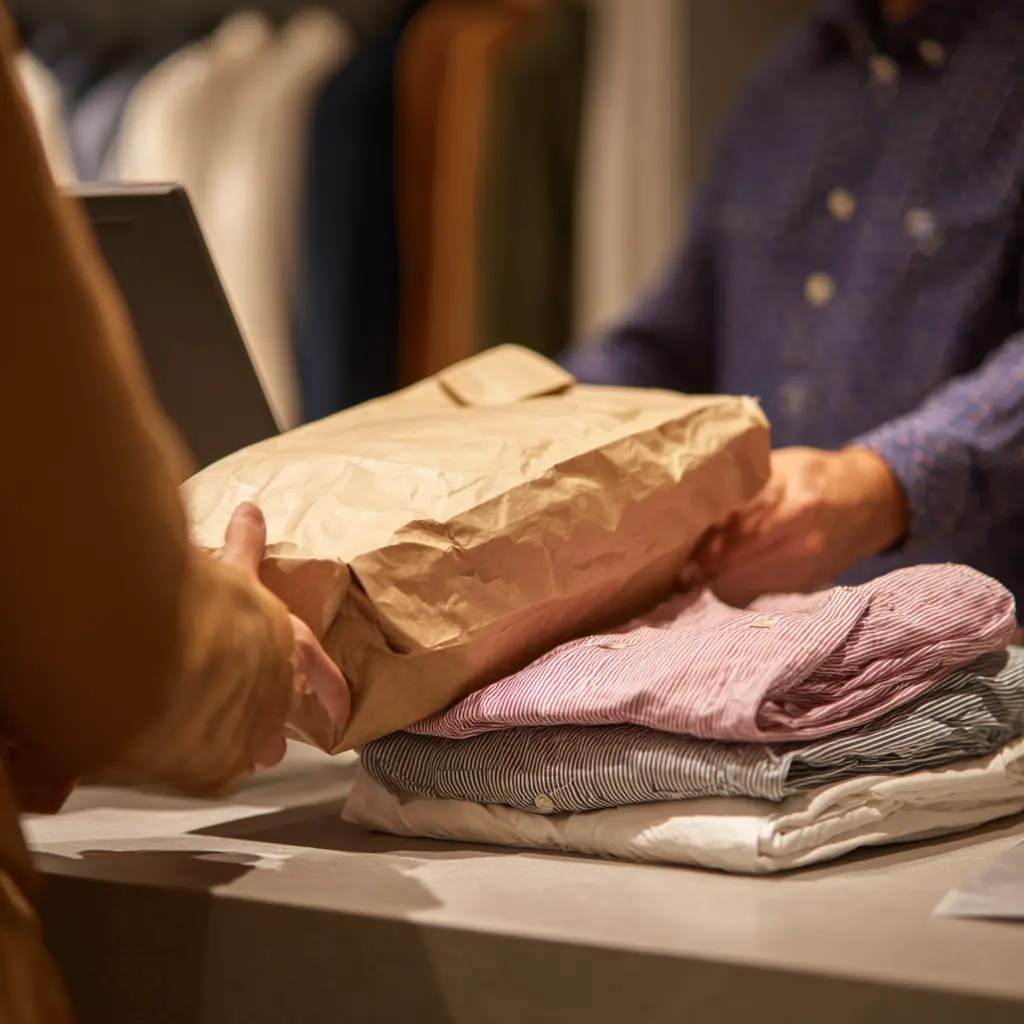
From paper to finished bag — confidence in every batch.
Fit: the space between food and paper
The most important factor is how much empty volume is left once the food is inside.
- Too much space: the item slides to the bottom, the top of the bag collapses or is folded over several times, and the customer sees mostly paper.
- Too little space: the bag is hard to fill, food gets squashed, and glaze, cream or toppings stick to the paper.
- Good fit: the item goes in easily, sits upright or flat as intended, and the bag closes with one or two folds.
A practical test: pack your most common items in the bag you use now and look at them from the customer’s side. If you see more paper than food, the bag is probably too large for that item.
How different shapes present food
V-bottom bags
A V-bottom bag is flat with a pleated base and expands as it is filled. Because it takes the shape of its contents, a well-sized V-bottom bag looks full even with a single item. That makes it a good match for croissants, buns, sandwiches and cookies. Its narrow, tall shape also suits long items such as baguettes, which look substantial when they fill the bag lengthways.
Block-bottom bags
A block-bottom bag has a rectangular base and stands on its own. It keeps its shape whatever is inside, so empty space is visible. That is an advantage for orders that fill it, such as several containers or a boxed cake, because the bag looks solid and well packed. For a single small item it works against you: the item sits in the corner of a large box-shaped space.
Bags with handles
Handle bags are carried at the side, often swinging. A small order in a large handle bag tends to shift around and is felt as light. Matching the bag size to the typical order makes it feel well packed in the hand as well as to the eye.
Food service examples
| Order | Bag that undersells it | Bag that presents it well |
|---|---|---|
| One croissant | Large block-bottom bag | Small V-bottom bag, greaseproof if buttery |
| Baguette | Wide, short bag with the bread folded in | Long, narrow V-bottom bag |
| Two coffees and two pastries | Flat bag, cups wedged in at an angle | Block-bottom bag where everything stands level |
| Box of six cakes | Bag much wider than the box | Block-bottom bag a little larger than the box |
| Family delivery order | Several small bags | One block-bottom bag that holds the full set |
The pattern is consistent: the bag should be slightly larger than the food, not much larger. For bakeries, which sell many items of different sizes, our bakery packaging page shows typical constructions.
Weight, rigidity and the feel of the bag
Perception is not only visual. A bag that holds its shape when lifted feels more substantial than one that folds and crumples around its contents. Paper choice and construction both play a part. A stable base keeps the bag upright on a counter or a table, so the order looks complete when it is handed over.
This does not mean choosing the heaviest paper available for every item. A tiny pastry in a very stiff, oversized bag still looks small. The aim is a bag in proportion to the order.
Colour and print also affect perception
Print can make a bag look fuller or emptier. A large logo in the centre of the front panel gives the eye a focus, while a lot of plain paper above a small item emphasises the empty space. Some practical points:
- Position the main print in the area the food will fill, not at the very top of a bag that is folded over.
- On V-bottom bags, keep the design clear of the top section that is folded to close the bag.
- Natural kraft looks warm and crafted; bleached kraft makes colours brighter. Both work for food; choose the one that suits your brand.
- Use solid colours. Smooth gradients do not reproduce well on recycled-fibre paper.
How many sizes do you need?
Matching every item perfectly would mean dozens of bag sizes, which is impractical. Most food businesses do well with two or three sizes chosen around their best-selling items. Start with a list of what you sell most, measure those items in their packed form, and choose sizes that cover them with a small margin. Our guide to choosing paper bag size covers the measuring process in more detail.
Before ordering a printed run, ask for unprinted samples of the constructions you are considering and pack real orders in them. A few minutes at the counter with real food will tell you more than any size chart.
The bottom line
Customers judge a takeaway portion by the bag before they see the food. A bag that fits the order closely makes the portion look generous; one that is too large makes it look small. Choose V-bottom bags for single items and bread, block-bottom bags for multi-item and boxed orders, and size each one around your best-sellers. Managing perceived portion size is mostly a matter of fit, and it costs nothing extra.
Want to check how your products look in different bags? Contact us for free unprinted samples and a quotation.
Fast Packaging Supply
Get a precise quote and delivery timeline within 24 hours.