The Wrong Bag Size Slows Down Order Packing
When an online shop or a delivery kitchen looks for ways to pack faster, it usually looks at people, software and the layout of the warehouse. The bag rarely gets attention. Yet the size of the bag is involved in every single order, and a poor choice adds a few seconds each time: hesitating over […]
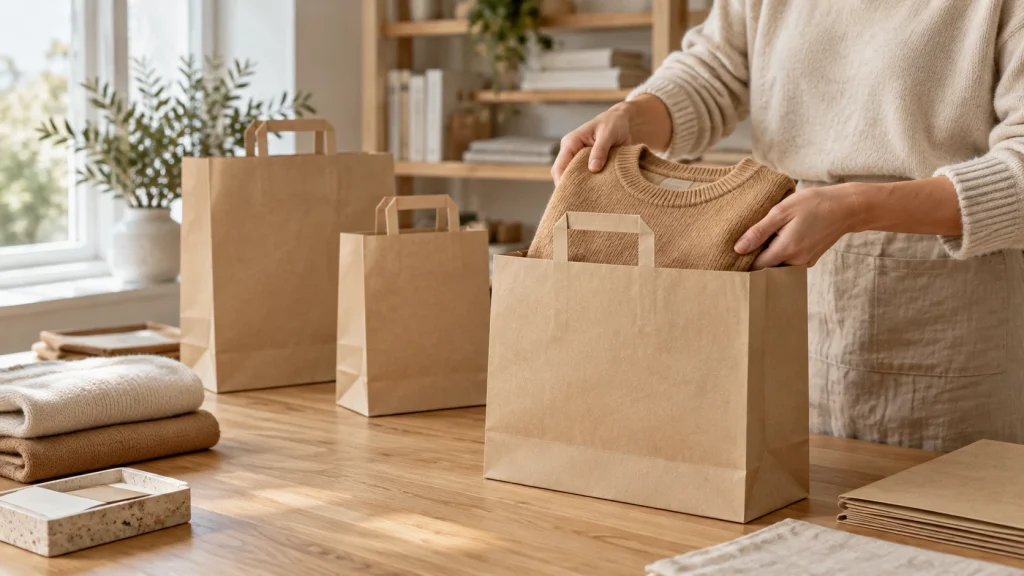
When an online shop or a delivery kitchen looks for ways to pack faster, it usually looks at people, software and the layout of the warehouse. The bag rarely gets attention. Yet the size of the bag is involved in every single order, and a poor choice adds a few seconds each time: hesitating over which bag to take, forcing an item in, folding down an oversized top, repacking an order that did not fit. Over a busy day, those seconds add up to hours. This article looks at bag size from the point of view of order packing, not branding, and explains how to find a size range that keeps the packing station moving.
Where order packing time actually goes
Packing an order into a bag takes a sequence of small steps: choose the bag, open it, put the items in, check that everything fits, close the bag, attach the label. A well-sized bag makes most of these steps automatic. A badly sized one creates extra work at almost every stage:
- Choosing takes longer when the packer has to guess which of several similar sizes will fit.
- Filling takes longer when items have to be turned, pushed or rearranged.
- Closing takes longer when an oversized top has to be folded several times or taped down.
- Correcting mistakes, such as taking out an order and repacking it in a larger bag, is the most expensive step of all.


Maximum Customer Trust
Certificates, quality, and stable supply — a plus for your business.
When the bag is too big
Oversized bags feel like the safe option: everything fits. In practice, they cause their own problems.
- Items slide around and can arrive damaged, especially boxes and containers that should stay upright.
- The packer spends time folding and securing the excess paper at the top.
- The order looks careless to the customer, as if it had been packed in whatever was at hand.
- Large bags take more space at the packing station and in the courier’s bag or vehicle.
When the bag is too small
An undersized bag is worse, because the problem is not visible until the packer tries to close it.
- Items are forced in, which strains the seams and the base of the bag.
- Corners of boxes can tear the paper, either at once or on the way.
- The order has to be repacked in a bigger bag or split into two, which takes time and confuses the courier.
When there are simply too many sizes
Some businesses try to solve fit problems by adding a new size every time an order does not fit well. After a year, the packing station holds six or eight sizes, several of them almost identical. This slows packing in a different way: packers hesitate, shelves are crowded, the right size runs out while others sit untouched, and purchasing has to manage many small orders instead of a few large ones. A smaller, well-chosen range is almost always faster than a large one.
Measure your typical orders
The right size range comes from your orders, not from a catalogue. A simple exercise gives you the data:
- Collect a sample. For two or three normal weeks, record the contents of a representative set of orders: number of items, their packaging and the overall dimensions when stacked as the packer would stack them.
- Group similar orders. You will usually see a handful of clusters: single small items, typical two- or three-item orders, large orders, and a few unusual ones.
- Size for the clusters, not the extremes. Choose a bag for each common cluster, with a sensible margin for closing. Handle rare oversized orders separately, for example in a box.
- Check the shape, not just the volume. Food containers need a base that matches their footprint; flat items such as clothing or documents need width rather than depth.
For most e-commerce and delivery businesses, this produces two to four sizes that cover the great majority of orders. Our earlier guide on how to choose the perfect paper bag size covers the branding side of the same decision.
Choose the construction for the packing station
Size is only half of the decision; the construction also affects order packing speed.
- Block-bottom bags stand open by themselves, so the packer can fill them with both hands. They are the natural choice for food delivery and for boxed goods.
- V-bottom bags are flat, compact and quick for single small items, such as accessories, cosmetics or a pastry.
- Bags with twisted or flat paper handles are easier for couriers to carry and hand over, especially when several orders travel together.
Organise and test the packing station
Once the range is set, a few practical steps help packers benefit from it:
- Place the most frequently used size closest to hand.
- Label the shelves or dispensers with the size and a short rule, for example “one to three items” or “two large containers”.
- Add the recommended bag size to the picking list, if your system allows it.
- Review the range every few months: new products can change your typical orders.
A smaller range also helps purchasing. Custom-printed bags are produced from 30,000 units, so concentrating volume on fewer sizes makes it easier to reach production quantities and keep each size in stock. More about packaging for online retail is on our e-commerce and delivery page.
Before placing a printed order, run a short trial. Free unprinted samples of our constructions are available from stock. Give them to your packers for a shift, pack real orders, and note where they hesitate or struggle. A day of testing is cheaper than a season of slow packing.
The bottom line
Bag size is an operational decision as much as a design one. Bags that are too big, too small or too numerous each slow down order packing in their own way. Measure your real orders, group them, cover the common clusters with two to four sizes in the right construction, and organise the station around them. Your packers will notice the difference before your customers do.
Reviewing your size range? Send us a description of your typical orders, and we will help you choose sizes and constructions.
Eco-friendly & Prestigious
Certified paper bags build trust in your brand.